

Αἰγαία Σκέψις
Aegean Reflection: A Myth in Four Movements

O Memory, preserve them as they were.
And, Memory, all you can of this love of mine,
Whatever you can bring back to me tonight.— C. P. Cavafy, “Grey”
Νύκτωρ
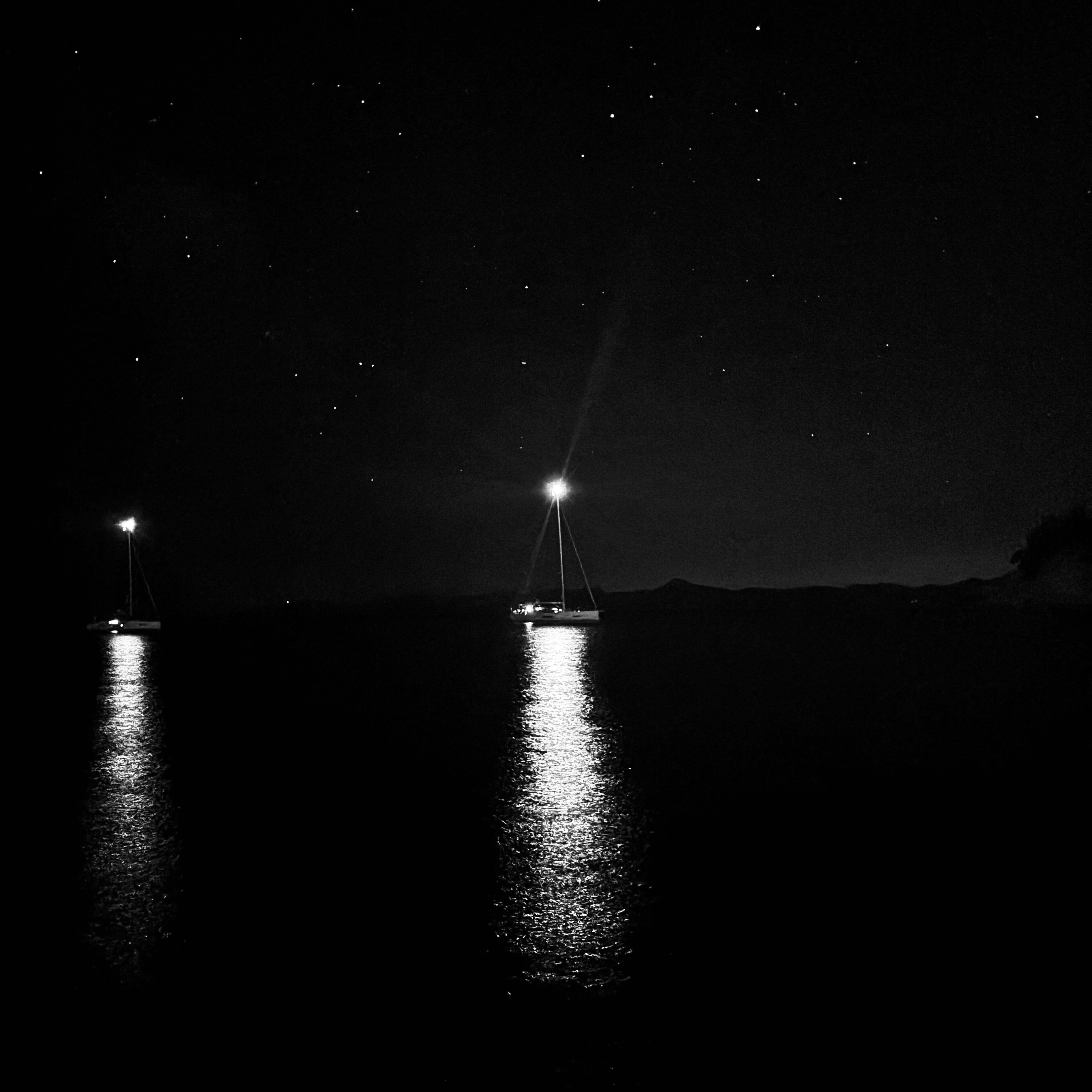
As I watch the bright stars shining, and the waves caress both stone and sand, my mind wanders to the watch lights of the boats resting in the gulf. On the beach at night alone, my heart tries to summon both words and symbols from the shining, silent void.
Yet I find myself mute amongst ghosts. Ancient is my heart. They are my kin, and still I feel like a schoolboy. Whenever we spoke of a poem or a book in school, I always felt the teacher was withholding something important, that there was some hidden meaning being kept from us because we were too young. And now, despite having looked into the void myself, despite knowing that darkness, I remain no less speechless before the great books. They shine like the stars above the Aegean: brilliant, distant, and forever beyond possession.
Μῆνιν
You cannot simply drop swift-footed Achilles, said Mnemon to his apprentice. If you begin choosing what deserves to be remembered, you will soon forget how to remember at all.
Teacher, answered the young man, fresh white hairs already showing in his beard, they are both too long. It has been years since we sang the whole of Odysseus’ journey, and that was only because we were in Ithaca itself.
Yes, my boy. But only last summer we sang of swift-footed Achilles no fewer than a dozen times.
Not in its fullness, teacher.
Oh yes, in its fullness, a dozen times. Only never to the same gathering twice. These songs are heavy because I made them heavy enough to endure the ages.
Teacher, they are both great. But who will wish to hear them when the names of Odysseus or Achilles mean nothing anymore? Other words could fill the meter.
Mnemon laughed.
Oh, foolish boy. Their names shall not endure because they are heroes. They shall endure because the songs endure. Men forget kings, cities, even the names of their forefathers. Yet a true song remembers itself.
He picked up a stone and cast it into the sea.
Do you see the ripples? No wave belongs to the stone that birthed it. So it is with songs. A learned man once told me in Athens that at the heart of all things lies the uncuttable. These songs are uncuttable. Remove a verse because your feeble mind cannot bear it, and you do not shorten the song. You wound it. You make it forget itself.
So let them fill you. Carry them whole. Pass them on. And perhaps a few will remember the man who pledged his life to Mnemon, the hostage of my great work.
Homer.
Homer who picked up a stone and cast it at his master, the blood rippling out of Mnemon’s head like wine at a feast, wetting both the stone and the sand.
Ἄνδρα
In the darkness that was life, he could not see how much he had aged. He only knew that for a while now he walked as though he were drunk all the time, not just at night when he drank himself to sleep. His mind grew weaker with every passing season. He even began to forget the face of Mnemon. Oh, had he only known this, he would never have blinded himself. A useless gesture. The face had mocked him with its smile for decades, carried by all of his apprentices, all but the last.
A boy called Phos. He had forgotten the names of the others, just as he had forgotten so many things. Only the songs remained.
Who composed these songs, boy? asked Homer, after the last string had been strung and the last word of the second epic had been sung, its reverberations still lingering in the air.
Master, teacher, Homer, of course.
That is good. And who is Homer, my boy?
I am Homer, for I have pledged my life to the singing of these two songs, and I am their prisoner.
Good, my boy, good. But they never belonged to me. They belong to Memory.
Indeed, teacher.
Our names shall be forgotten, forgotten the names we bore at birth. But the names of the songs shall remain, even when we are but ghosts walking the shores of Tartarus.
Boy, I am dying.
Where shall I bury you, teacher?
Leave me upon this shore, and Poseidon will see to the rest. Sing these songs while men still have ears to hear them, for they shall not be sung for long. We have slandered the gods enough with these tales, and there are many slanders now walking through glorious Hellas, sailing as far as Thrace and even Ultima Thule, carrying knowledge of the folly of the gods and stirring their wrath.
Soon the sea shall rise and take my body. Then it shall keep rising until it reaches the peaks of Olympus. The gods shall come down to bathe upon the shore, naked, laughing at our corpses.
And still, upon the last boat of mankind, with the last man, uncertain and alone, these words that begin with wrath, these words that begin with man, shall yet be carried.
Τὸ Πᾶν
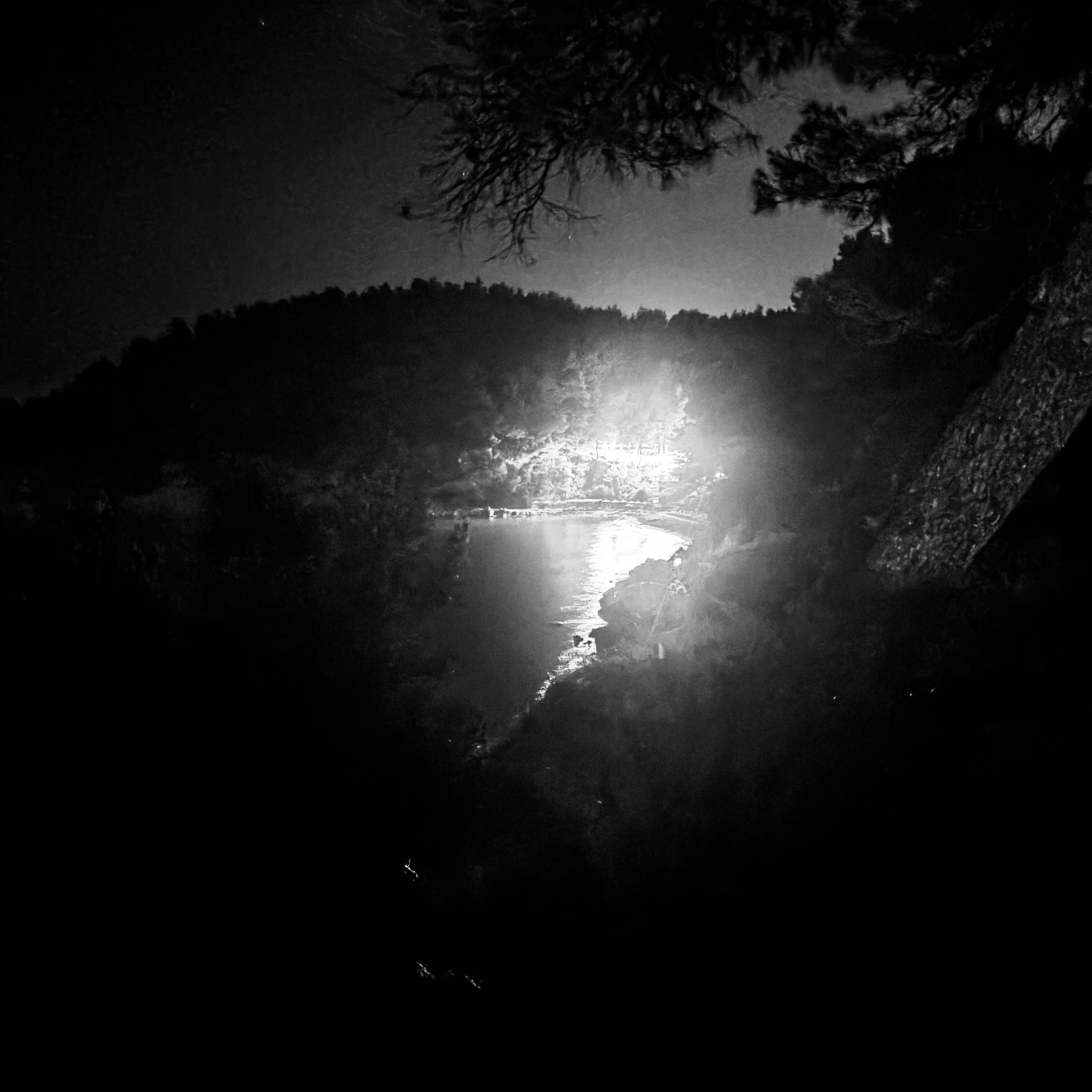
And in the cool night, I gaze upon the tavern lights, where there is no bard to sing of swift-footed Achilles or Odysseus the rogue. But here I am, watching the same stars that Homer probably watched, if he ever had eyes.
And surely many others watched them too, listening to the songs, or remembering them by campfires long turned to ash, the ash turned to dust. Maybe the atoms of that dust are now within me, moving the void within me to tell this story in a barbarous tongue, to write it down on no parchment, and send it from one void into another. A night not of silence, though I hear the waves crashing and lulling. A void electric, a void bright.
As a child, I always tried to analyze stories, to find the hidden meaning always escaping me, always slipping away like sand. And now I am just as unmoored, but I have not learned to understand the void at the heart of each story. I have learned to draw from it.
Indeed, Whitman was true, a vast similitude interlocks all. All spheres, grown and ungrown, large and small, suns, moons, and planets. The world has died many times since Homer’s time, sunken and risen, and yet that song endured.
Man, you never disappoint. To read you is always an experience 😮💨
Awesome stuff Stefan. Romania’s finest writer. Beautiful prose 🙏🏻